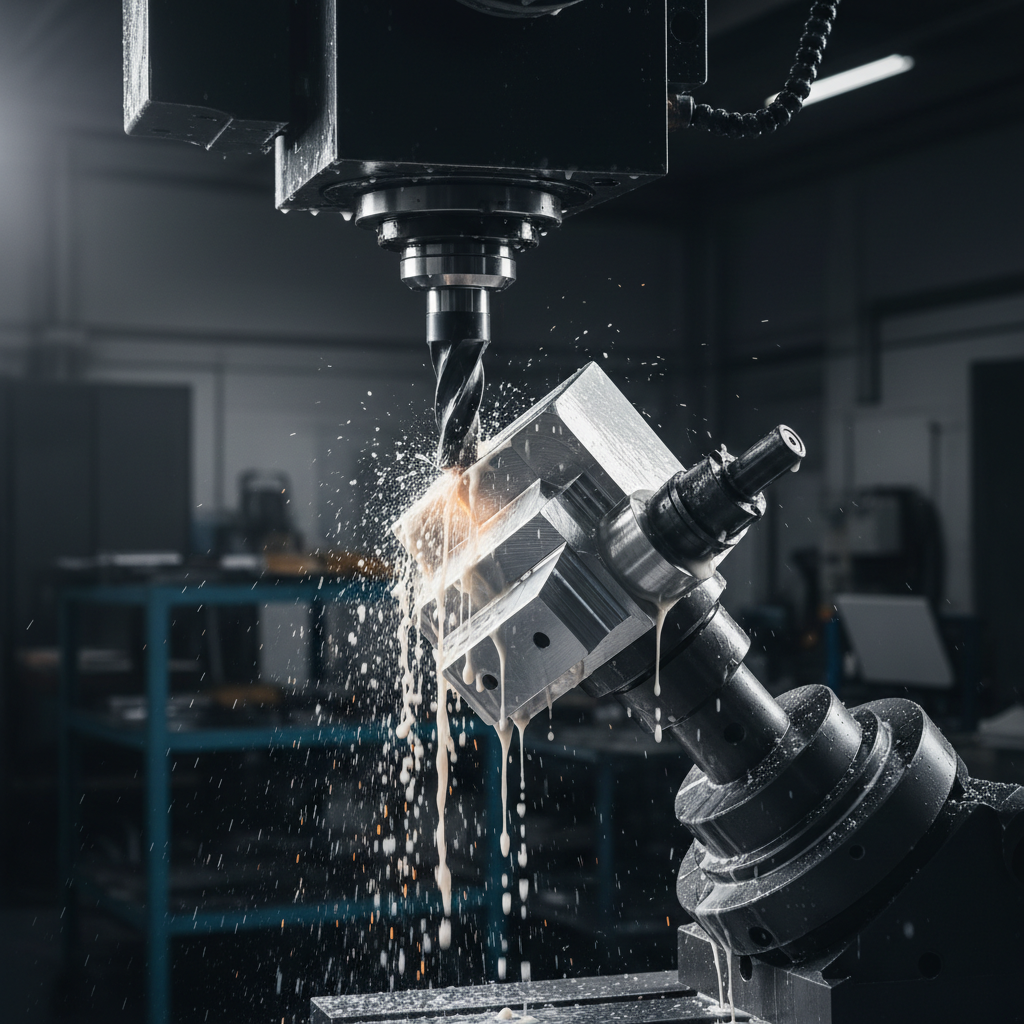
CNC — CNC Machining
EMT operates more than 20 CNC machines including Vertical 3, 4 & 5-axis milling centers, CNC lathes, Wire Cut, and EDM. We machine metal and plastic parts directly from solid stock with tight tolerances and excellent surface quality. Available from a single piece with no MOQ — ideal for functional prototypes, design validation, and short-run production.
What is CNC Prototype Machining?
Prototype machining is the process of creating a small batch of a final part — with the intention of a full production run to follow. The purpose of the prototyping stage is to convey physical information about the design: how a digital model translates into a real object, and what the properties of the end product actually are.
Functional prototypes allow engineers to identify design defects and eliminate them before large-scale production begins — making the eventual production run more cost-effective and reducing downstream risk.
CNC machining is the go-to technology for prototype machining. It uses computerized controls to govern the precise movement of cutting tools and workpieces in multiple axes simultaneously for exceptional dimensional accuracy.
Why Engineers Choose CNC
CNC machining is suited for prototyping across virtually every industry — from early-stage functional validation to pre-production runs. It is the preferred process when engineers need a prototype that matches the final part in material, strength, and dimensional accuracy.
Unlike 3D printing, CNC-machined parts do not exhibit directional weakness along build axes. Parts are strong in all directions, making them appropriate for mechanical, structural, and load-bearing tests.
Process Performance
Best For
Advantages of CNC Prototype Machining
Any part produced by CNC machining is an exact replica of every other part made with the same program. This precise consistency is critical for prototypes, which must faithfully replicate the original design — not introduce process-level variation.
CNC machining gives engineers fine control over cutting tool movement, enabling tolerances down to ±0.01 mm. When flaws appear in a CNC prototype, engineers can trust those flaws come from the design — not from the manufacturing process.
CNC prototype machining requires no molds and no time-consuming setup prerequisites. Design changes are applied directly to the CAD/CAM file — the machine can re-run the updated program immediately, compressing iteration cycles.
Catching and correcting defects in a small prototype batch is far cheaper than troubleshooting them after large-scale production. Future design revisions require only minor CAD file edits — no new tooling, no sunk costs.
Unlike 3D printing, which is largely limited to plastics and resins, CNC machining works with the full range of engineering materials — aluminum, steel, stainless steel, titanium, ABS, PC, HDPE, PMMA, brass, and more. The prototype can be machined from the exact same material as the final production part.
CNC machining centers are built to produce end-use parts — not just models. This means a CNC prototype can be used directly for structural testing, assembly validation, or even short-run production without a separate process.
Limitations of CNC Prototype Machining
Higher material costs, energy consumption, and skilled labor make CNC prototype machining more expensive per part than additive methods. For very early-stage concept models where geometry is still fluid, 3D printing may be the better economic choice.
CNC machining creates parts by removing material from a solid workpiece. A large portion of the raw stock ends up as chips or swarf. While metals can often be recycled, the material waste is an inherent characteristic of the process.
Because CNC machines work from the outside inward, certain internal geometries — deep cavities, enclosed channels, complex undercuts — are difficult or impossible to machine without multi-step setups or supplementary EDM/Wire Cut operations.
CNC machining demands specific engineering knowledge: CAD/CAM file preparation, G-code toolpath programming, fixture design, and machine operation. It is not a push-button process — skilled machinists and engineers are required for quality results.
Applications of CNC Machined Prototypes
Medical companies need functional, exact prototypes before any device enters production — whether an orthotic device, surgical instrument, implant, enclosure, or research equipment. CNC machining delivers the precision and material compliance these applications require.
Automakers prototype new components — brackets, housings, powertrain parts, interior panels — to verify fit and function before committing to a production line. CNC machining accommodates the full range of automotive-grade metals and plastics.
One small dimensional error in aerospace can increase drag or accelerate component wear. CNC machining is used to prototype landing gear ports, bushings, manifolds, airfoils, and structural components where zero tolerance for error is the standard.
Complex ammunition, vehicle structures, communication systems, and transportation components often require CNC-machined prototypes. The mechanical strength and precision of CNC parts meet the stringent requirements of defense applications.
Heat sinks, EMI shields, connector bodies, and precision enclosures are routinely prototyped via CNC machining in aluminum or engineering plastics — processes that deliver the dimensional accuracy electronics hardware demands.
Across every sector, CNC machining is the backbone of R&D prototyping. Jigs, fixtures, QC tooling, test rigs, and design validation components are all produced faster and more accurately with CNC than with any alternative subtractive method.
Ready to Start?
Send us your CAD files and requirements. Our engineers will review your design and provide a detailed quote.
Get A Quote