SLM — SLM (Metal 3D Printing)
SLM (Selective Laser Melting) is an advanced metal 3D printing technology that melts fine metal powders layer-by-layer using a high-powered fiber laser. Operating inside an inert gas chamber to prevent oxidation, it builds fully dense, highly complex metal parts directly from digital CAD files without requiring traditional molds. Available materials include Aluminum (AlSi10Mg) and Stainless Steel (SUS316L) with layer thickness of 100 microns. While not a replacement for CNC machining, SLM is an excellent alternative to die casting or traditional casting processes, offering unmatched design freedom including internal cooling channels and complex lattice structures, with minimal material waste and excellent mechanical strength.
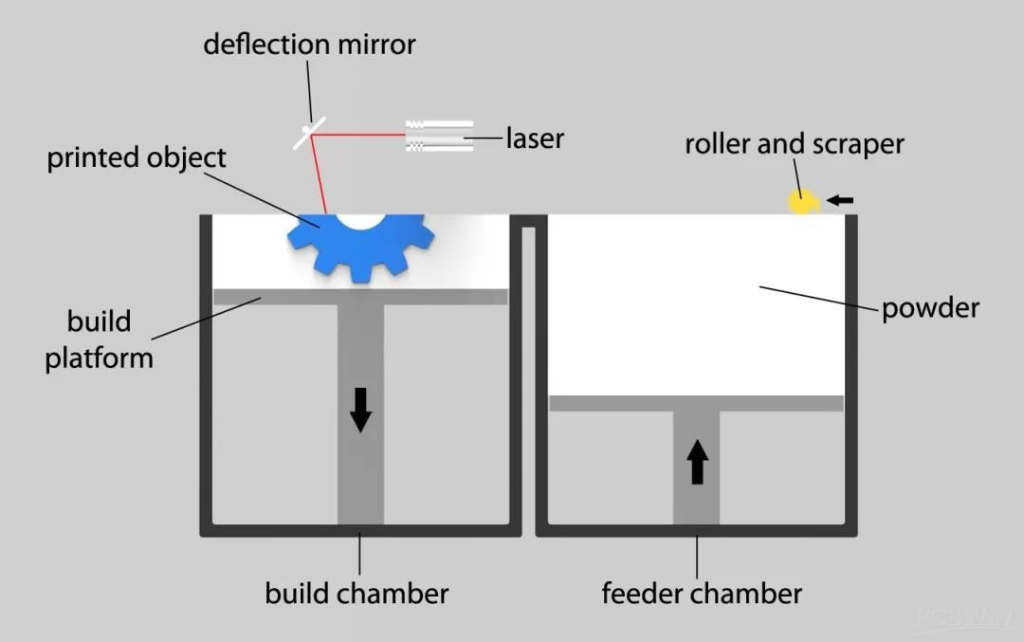
How SLM Works
Preparation
3D CAD model is sliced into thin cross-sectional layers, and necessary support structures are generated.
Powder Spreading
A thin layer of metal powder is rolled uniformly across the build platform.
Laser Melting
A powerful fiber laser traces the exact geometry of the part, fully melting the metal powder so it fuses with the layer beneath it.
Layering
The build platform lowers, a new layer of powder is applied, and the process repeats until the object is finished.
Post-Processing
Parts cool gradually in an inert gas chamber. Excess powder is recycled, support structures are removed, and parts may require CNC milling, heat treating, or finishing.